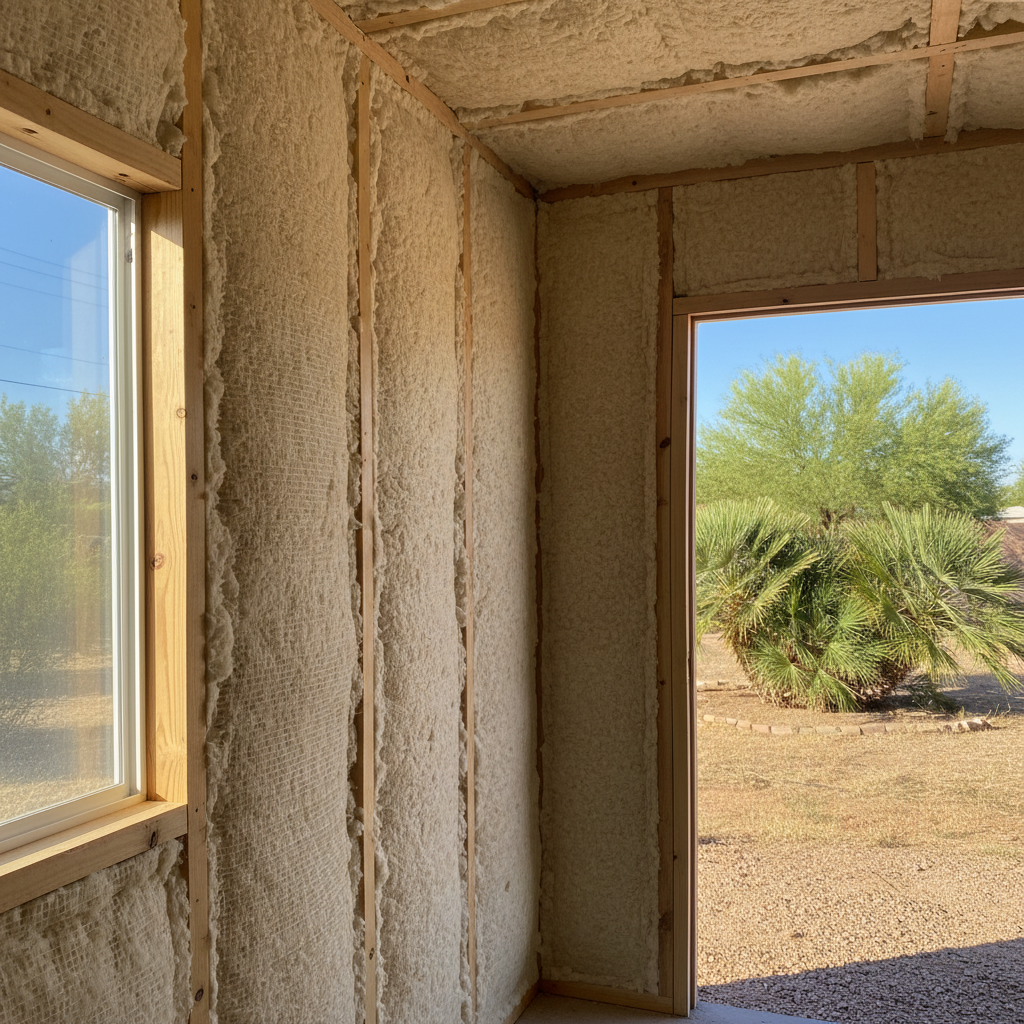
Alright, let's talk sheds. Here in Chandler, I see a lot of folks with sheds in their backyards. Some are for storage, others are workshops, and some are even turning into cool little home offices or "she-sheds." But one thing's for sure: if it's not insulated, that shed is just another oven out there for half the year, and then a freezer for the other half. I get a ton of questions about insulating sheds, so I figured I'd put together some answers to the most common ones I hear.
Do I really need to insulate my shed in Chandler?
Look, you're in Chandler, Arizona. We regularly hit 115 degrees in the summer. If you're using that shed for anything more than just storing a lawnmower you couldn't care less about, then yeah, you absolutely need to insulate it. Without insulation, anything sensitive to heat stored in there – paints, chemicals, electronics, even some tools – is going to get cooked. If you're spending time in there, maybe as a workshop or a home office, it'll be unbearable without insulation and AC. Even for general storage, insulation helps protect your stuff from those wild temperature swings, which can really cause damage over time. It's not just about comfort; it's about keeping your investment safe, both the shed itself and everything inside it.
What's the best insulation for a shed?
This really comes down to your budget and how you're actually going to use the shed. For most sheds, you've got a few solid options. Fiberglass batts are common and pretty inexpensive, but they definitely need a vapor barrier in our climate to stop moisture problems. Rigid foam board is another good choice; it's easy to cut and install, gives you a decent R-value for its thickness, and it doesn't soak up moisture. Then there's spray foam. For a shed, especially if you want to seal up every tiny crack and crevice, spray foam is king. It creates an amazing air seal and offers a high R-value, making your shed super efficient. We do a lot of shed projects with spray foam at Chandler Spray Foam Insulation because, frankly, it just works so well with our extreme temperatures.
Can I insulate my shed myself, or should I hire a pro?
You can totally DIY some shed insulation, especially if you're going with fiberglass batts or rigid foam boards. It's a pretty straightforward process: measure, cut, fit, seal. Just make sure you're wearing the right safety gear – gloves, eye protection, and a mask – especially with fiberglass. However, if you're thinking about spray foam, that's usually a job for the pros. The equipment is specialized, and getting an even, effective application takes experience. Plus, you want to be sure you're using the correct type of foam and applying it safely. If you're not confident in your DIY skills, or if you just want the absolute best performance, calling in a contractor is a smart move.
Do I need a vapor barrier in my shed in Chandler?
Yes, you absolutely do, especially if you're using fiberglass or other fibrous insulation. We live in a dry climate, sure, but moisture can still be an issue. Condensation can form on cold surfaces inside your shed, particularly if you're running an AC unit in there. A vapor barrier, typically a sheet of polyethylene plastic, goes on the warm side of the insulation (which is usually the inside during our summers) to keep moisture from getting into the insulation and causing mold or making it less effective. Rigid foam boards and spray foam often act as their own vapor barriers, which is a nice bonus with those materials.
How much R-value do I need for my shed?
This isn't like a house where there are strict building codes for R-value. For a shed, it's more about what you're trying to accomplish. If it's just for basic storage and you want to take the edge off the heat, R-13 in the walls and R-19 in the ceiling might be enough. But if you're planning on spending a lot of time in there, running AC, or storing sensitive items, you'll want to aim higher. Think R-19 or R-21 in the walls and R-30 or even R-38 in the ceiling. The higher the R-value, the better the thermal performance, and the less your AC will have to work. Given our intense Chandler summers, I always recommend going as high as your budget and space allow, you know?
Should I insulate the floor of my shed?
Most sheds are built on concrete slabs or raised off the ground on skids. If your shed is on a concrete slab directly on the ground, insulating the floor isn't quite as critical because the ground actually acts as a thermal mass, keeping things relatively stable. However, if your shed is raised off the ground, especially if it's got a wood floor, then insulating the floor is a really good idea. Heat can radiate up from the hot ground, and cold can seep in during the winter. You can use rigid foam board cut to fit between joists, or even spray foam if you're having a professional do the walls and ceiling. It makes a noticeable difference in overall comfort and efficiency, especially if you're trying to keep the space conditioned.
What about insulating the shed door and windows?
Don't forget these! They're often overlooked, but a poorly sealed door or single-pane windows can undo a lot of your insulation efforts. For doors, you can add rigid foam panels to the inside, seal around the edges with weatherstripping, and put a good door sweep on the bottom. For windows, if you have single-pane, consider replacing them with double-pane windows, or at least adding window film or insulated curtains. Even small gaps around windows and doors can let in a ton of heat or cold, so sealing them up is crucial for a truly comfortable and efficient shed.
Will insulating my shed really save me money?
If you're planning on conditioning the space – running an AC unit in the summer or a small heater in the winter – then yes, absolutely. Insulation reduces the load on your HVAC system, meaning it doesn't have to work as hard or as long to maintain a comfortable temperature. This translates directly into lower electricity bills. Even if you're not actively conditioning it, by moderating the temperature swings, you're protecting your stored items, which can save you money on replacements down the line. It's an investment that pays off in comfort, protection, and energy savings.