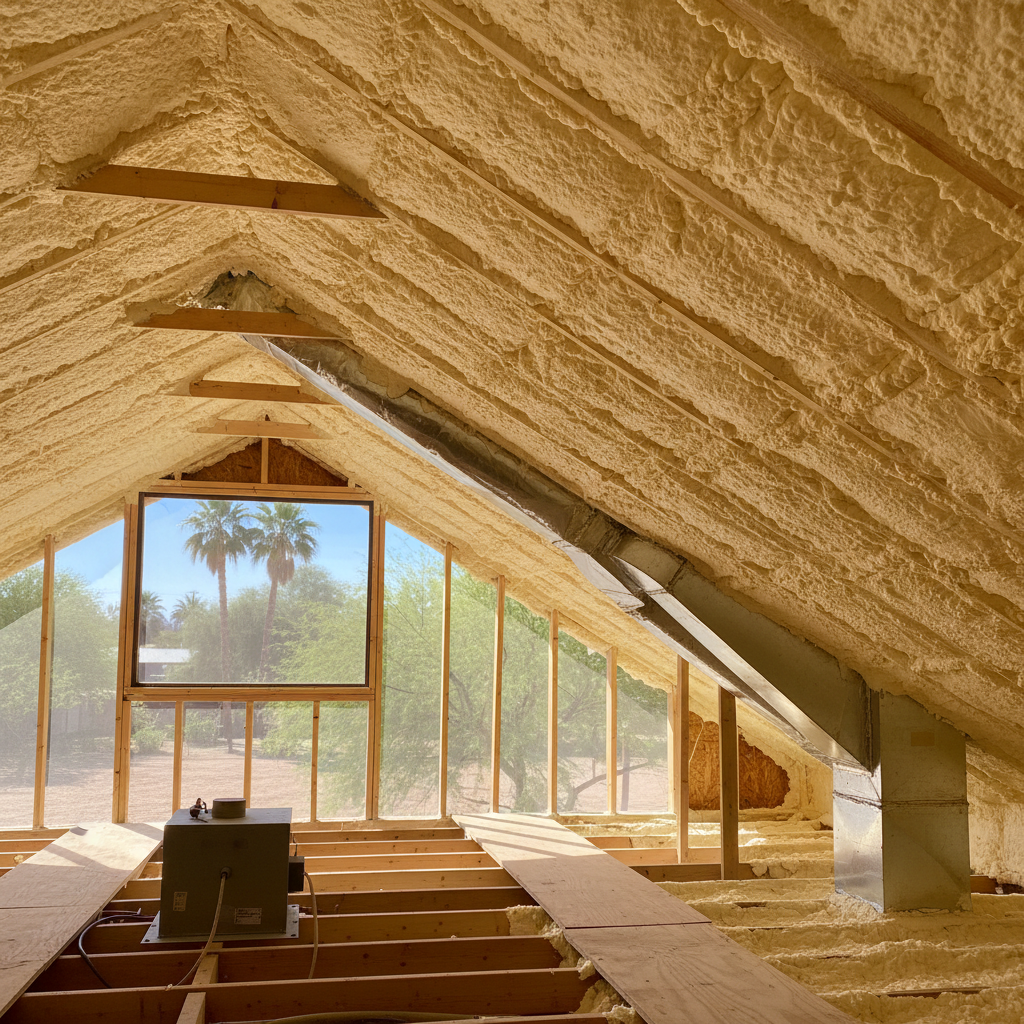
When you live in Chandler, Arizona, you already know how brutal the summer heat gets on your air conditioning unit. If your home envelope is leaking air, you are paying way too much to cool the desert outside. Chandler Spray Foam Insulation gets many questions about when it makes sense to install closed cell spray foam and how the local climate affects the process.
How the Chandler Climate Affects Your Foam
Our scorching summers and dry desert air create a very specific set of conditions for building materials. When temperatures in your attic or unconditioned spaces soar past 130 degrees, chemical reactions during application can get tricky. Closed cell foam creates a powerful vapor and air barrier, which is fantastic for keeping out the dust storms we get off the farm fields, but the substrate temperatures matter a lot. If the wood framing is baking in the sun, the foam can cure too fast and compromise its structural integrity.
Choosing the Right Window for Installation
Timing your project right means working around the peak of July and August. Spring and fall offer the most forgiving ambient temperatures for getting a clean, even application without fighting extreme heat. During the monsoon season, sudden spikes in humidity can also throw a wrench into things if moisture settles on your framing lumber before the liquids hit the wood. Planning your install during the milder shoulder months ensures the chemical reaction cures properly and delivers the maximum R-value per inch.
- Spring and autumn provide the ideal temperature window for chemical curing
- Summer afternoons require strict thermal management of roof decks
- Monsoon humidity demands careful moisture checks before spraying
Protecting Your Investment All Year Long
Once your closed cell foam is up, it is remarkably durable against the elements, but you still want to keep an eye on it. UV exposure will degrade the foam over time if it is left exposed in an open carport or exterior storage area, so keeping it covered with an approved thermal barrier is mandatory by code. Routine checks around your attic penetrations and wall joints will make sure your home stays sealed tight against the next heat wave.