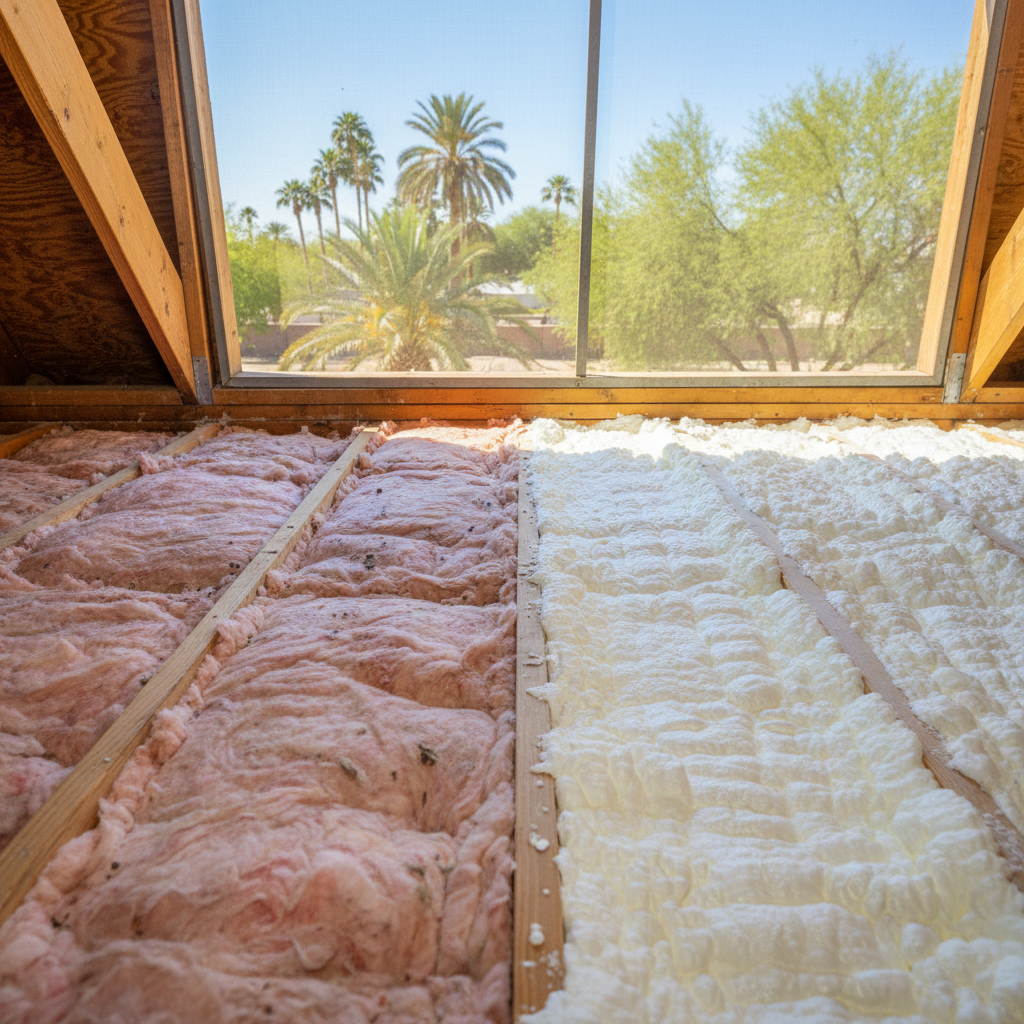
So, you've decided open cell spray foam is the way to go for your Chandler home. Smart move, truly. It's fantastic for air sealing and energy efficiency, especially out here where the sun tries its best to bake everything. But even with open cell, you've got a couple of different ways we can put it in: the 'flash and bat' method or a 'full cavity fill.' People ask me all the time which one's better, so let's talk about it.
Flash and Bat: The Hybrid Approach
First up, flash and bat. This is where we spray a thinner layer of open cell foam, usually about 1 to 2 inches thick, directly against the sheathing in your wall cavities. Once that foam cures, we come back and install traditional fiberglass or mineral wool batts on top of it, filling the rest of the cavity. Think of it as a hybrid system, kind of a best-of-both-worlds idea.
Cost Considerations
From a cost perspective, flash and bat can sometimes look more appealing upfront. You're using less spray foam, which is generally the more expensive material per board foot. The batts are cheaper, so if you're really trying to watch every penny, this might seem like a good compromise. It makes sense, right?
Durability and Maintenance
Durability-wise, it's pretty good. The spray foam layer gives you a fantastic air seal, which is its main job here. That air seal is permanent once it's in. The batts behind it are protected from air movement, so they'll perform better than if they were just installed on their own. Maintenance? Not much to worry about once it's in. It's a pretty set-it-and-forget-it system, honestly.
Appearance and Performance
Appearance isn't really a factor since it's all behind your drywall. Performance is where it gets interesting. You get excellent air sealing from the foam, which is crucial for stopping conditioned air from leaking out and hot, dusty Chandler air from leaking in. The batts add R-value. It's a good system, no doubt. But it's not quite as robust as a full fill.
Full Cavity Fill: Maximum Performance
Now, let's talk about full cavity fill. This is exactly what it sounds like: we fill the entire wall cavity, from stud to stud, with open cell spray foam. We spray it in, it expands to fill every nook and cranny, and then we trim off the excess flush with the studs before the drywall goes up. Chandler Spray Foam Insulation does a lot of these projects, especially in new builds or major remodels.
Cost Considerations
Full fill is generally going to be more expensive than flash and bat. You're using more spray foam per square foot of wall. There's also a bit more labor involved with the trimming process to get it perfectly flush. But, and this is a big but, you're getting more performance for that extra cost.
Durability and Maintenance
Durability is top-notch. It's 100% spray foam, so it's incredibly stable. No settling, no gaps over time. It creates a monolithic barrier. Maintenance? Zero. Once it's in, it's done. You don't have to worry about anything shifting or degrading behind your walls. It's truly maintenance-free.
Appearance and Performance
Again, appearance isn't a factor behind the drywall. Performance, though, is where full fill shines. You get the absolute best air seal possible, which means superior comfort and energy savings. The R-value is consistent across the entire cavity, and because it's completely filled, you eliminate any potential for convection currents within the wall. These can happen even with a flash and bat system if the batts aren't perfectly installed. This is huge in our extreme Arizona heat. The thermal bridging through the studs is still there, but the overall performance of the wall system is maximized.
My Recommendation for Chandler Homes
Look, both methods are better than just plain batts. But if you're asking me, for a home in Chandler, Arizona, I almost always lean towards a full cavity fill with open cell spray foam. Here's why:
- Superior Air Sealing: Our dust and heat are relentless. A full fill creates an impenetrable air barrier that flash and bat just can't quite match.
- Consistent R-Value: With the entire cavity filled, you get a much more consistent thermal performance across your walls. No weak spots, period.
- Moisture Control: While open cell is vapor permeable, a full fill helps manage any potential condensation issues better by keeping the interior surface of the sheathing warmer in winter and cooler in summer. Not a huge winter issue here, but every bit helps with those monsoon humidity spikes.
- Sound Dampening: A full fill does a better job at reducing noise transfer, which is a nice bonus if you're near a busy street or have noisy neighbors.
- Long-Term Savings: The initial cost is higher, but the increased energy efficiency over the lifespan of your home will almost certainly make up for it. You're talking about decades of lower utility bills.
Especially in older homes around areas like the Dobson Ranch or Sun Lakes where construction might not have been as tight, a full fill can make a massive difference. You're not just insulating; you're essentially wrapping your home in a custom-fit thermal blanket. When the summer temps hit 115 degrees, you'll be glad you went with the full fill. It's an investment that truly pays off in comfort and energy savings here in the desert.