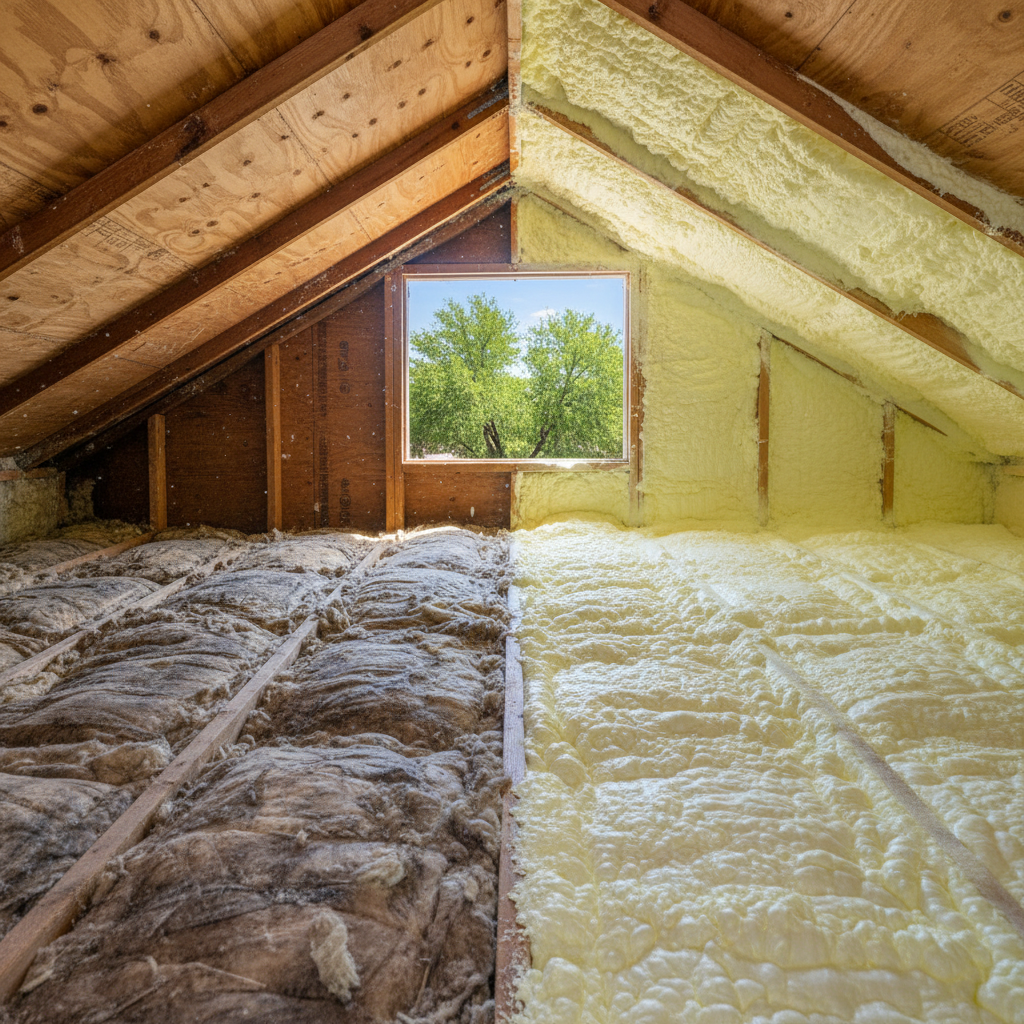
Alright, so you're looking into closed-cell spray foam for your place here in Chandler. Smart move. It's fantastic for our desert climate, giving you a really tight thermal envelope and helping to keep those AC bills from going through the roof. But when you start digging, you'll hear about two main ways folks apply it: 'flash and batt' or 'flash and fill' (same thing, just different names) and 'full-fill' closed-cell. What's the difference, and which one's right for your home?
Flash and Batt: The Hybrid Approach
Let's talk about flash and batt first, because it's a pretty common one, especially when people are trying to balance cost with performance. With this method, we spray a thin layer of closed-cell foam – usually just an inch or two – directly onto the sheathing, like the underside of your roof deck or the inside of your exterior walls. That thin layer does a couple of really important things: it creates an airtight seal, stopping air leaks dead in their tracks, and it acts as a vapor barrier. That's a big deal here in Arizona where we're constantly fighting heat and sometimes humidity.
After that thin layer of closed-cell foam cures, then we come back and fill the rest of the cavity with traditional batt insulation, usually fiberglass or mineral wool. So, you're getting the air sealing and vapor control benefits of closed-cell foam, plus the bulk insulation R-value from the batt. It's a hybrid system, hence the name.
Pros of Flash and Batt:
- Cost-Effective: Generally, this is a cheaper option upfront than full-fill closed-cell. You're using less of the more expensive spray foam.
- Good Air Sealing: That thin layer of closed-cell foam does a fantastic job of stopping air infiltration, which is a huge energy drain.
- Vapor Control: It creates an effective vapor barrier, which is important for preventing moisture issues.
Cons of Flash and Batt:
- R-Value Limitations: While the batt adds R-value, you're still relying on two different materials. The overall R-value might not be as high or as consistent as full-fill foam.
- Potential for Settling: Batt insulation can sometimes settle over time, creating gaps and reducing its effectiveness.
- Installation Complexity: It's a two-step process, meaning more time on site and two different materials to manage.
Full-Fill Closed-Cell: The Powerhouse
Now, full-fill closed-cell spray foam is exactly what it sounds like. We fill the entire cavity – whether it's your wall studs or the rafter bays in your attic – with closed-cell spray foam. No batt insulation needed. We just keep spraying until that cavity is packed solid with foam. This stuff expands and hardens, creating a dense, rigid, and completely seamless layer of insulation.
Pros of Full-Fill Closed-Cell:
- Superior R-Value: Closed-cell foam has a higher R-value per inch than most other insulation types, including open-cell foam or batt. You get more insulating power in a smaller space.
- Unmatched Air Seal: Because it fills every nook and cranny, it creates an incredible air barrier. No drafts, no air leaks.
- Structural Rigidity: It actually adds a bit of structural strength to your walls or roof deck. It's not a primary structural component, but it helps.
- Pest Resistant: Pests aren't interested in tunneling through dense foam.
- Moisture Resistance: Closed-cell foam doesn't absorb water like other insulations, making it ideal for our monsoon season.
- Long-Term Durability: Once it's in, it's not going anywhere. It won't settle, sag, or degrade over time.
Cons of Full-Fill Closed-Cell:
- Higher Upfront Cost: This is usually the biggest hurdle for folks. It's more expensive per board foot than flash and batt.
- Less Forgiving: Once it's sprayed, it's there for good. You can't easily remove it or adjust it.
The Chandler, AZ Recommendation: Full-Fill Wins
Look, for most homes here in Chandler, especially with our scorching summers and the way we build, I'm going to lean towards full-fill closed-cell spray foam almost every time. Why?
- Extreme Heat: Our summers are brutal. You need the absolute best thermal performance you can get, and full-fill closed-cell delivers that superior R-value and air sealing to keep the heat out.
- Dust Control: That airtight seal isn't just about temperature; it's about keeping our infamous Chandler dust out of your house.
- Humidity (Monsoon Season): While it's dry most of the year, those monsoons bring humidity. Closed-cell foam's moisture resistance is a huge plus.
- Longevity: You want an investment that lasts. Full-fill closed-cell foam won't degrade in our harsh environment. It's a 'set it and forget it' solution.
Think about it like this: you're already investing in spray foam. Flash and batt is a good compromise, but full-fill closed-cell is the premium, long-term solution that truly maximizes your energy savings and comfort in our specific climate. When you're dealing with 115-degree days, you don't want to cut corners on insulation.
We at Chandler Spray Foam Insulation have done plenty of both, and we're always happy to walk you through the specifics for your home. But if you want the absolute best performance and the most comfort for your money over the long haul, full-fill closed-cell is usually the way to go here in the Valley.