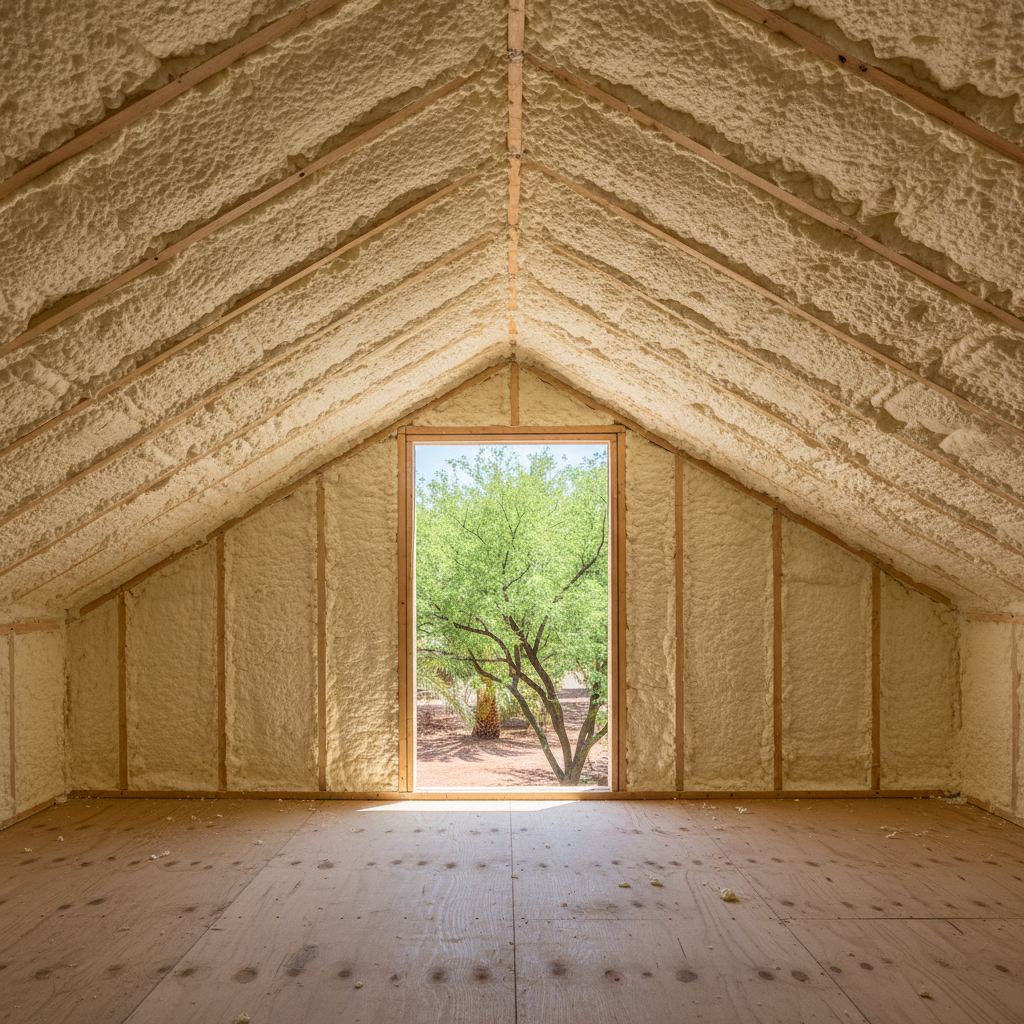
Alright, let's talk about closed cell spray foam here in Chandler. It's a fantastic product, no doubt about it. You're looking at serious energy efficiency, a tighter home, and often, a much quieter one too. But like anything worth doing right, there's a bit of an art to getting it installed perfectly, especially with our unique Arizona weather. It's not just about spraying it on; it's about when and how you do it.
Why Timing Your Closed Cell Install Matters in Chandler
You might think, 'Insulation is insulation, just put it in!' And yeah, that's true for some materials. But closed cell spray foam is different. It's a chemical reaction that happens right there on site, and that reaction is sensitive to temperature and humidity. Here in Chandler, we've got extremes. We're not dealing with mild, consistent weather for most of the year.
- The Heat: Our summers are brutal. I'm talking 115-degree days that bake everything. When it's that hot, the substrate (the surface you're spraying onto) can get incredibly hot. This can affect how the foam cures, sometimes making it cure too fast or unevenly.
- The Cold: While not as common, we do get cold snaps in winter. If it's too cold, the foam might not expand and cure properly, leading to a less dense, less effective product.
- Humidity (Monsoon Season): Our monsoon season brings humidity that most folks don't associate with the desert. High humidity can also interfere with the chemical reaction, potentially causing issues with adhesion or density.
So, what's the sweet spot? Generally, I'd say the shoulder seasons are your best bet. Think late fall, winter (when it's not freezing), and early spring. The temperatures are more moderate, making it easier to control the curing process. This isn't to say we can't do it in summer or deep winter, but it requires more careful temperature control on our end, like pre-heating or cooling the space, which can add to the complexity.
Ideal Weather Conditions for a Perfect Job
When we're looking at scheduling your closed cell spray foam, here's what we're ideally hoping for:
- Temperature: We're aiming for substrate temperatures generally between 40°F and 100°F. If it's outside that, we've got ways to manage it, but staying within that range makes for the most straightforward and reliable application.
- Humidity: Lower humidity is always better. The drier the air, the less chance of moisture interfering with the foam's reaction. Our usual desert dryness is actually a plus here, outside of those monsoon weeks.
- Wind: Believe it or not, wind can be a factor, especially if we're spraying in an open area like a new construction. Too much wind can blow the spray pattern, leading to uneven application or overspray.
Now, I know you can't control the weather. Nobody can. But understanding these factors helps you see why we might suggest certain days or times. We're always monitoring conditions and adjusting our approach to ensure you get the best possible outcome for your investment.
Protecting Your Investment Year-Round
Once that closed cell spray foam is in, it's pretty much set and forget, which is one of its biggest advantages. It's incredibly durable and long-lasting. But there are a couple of things you should know to make sure it keeps doing its job for decades.
- Don't Mess with It: Seriously, once it's cured, leave it alone. Don't try to cut into it or remove sections unless you absolutely have to, and if you do, call a professional. You can compromise its integrity.
- Pest Control: While closed cell foam isn't a food source for pests, it's not a magical barrier against them either. Keep up with your regular pest control around the perimeter of your home. A good spray foam job will seal up a lot of entry points, but it's not a substitute for overall pest management, especially with scorpions and rodents we deal with in areas like Sun Lakes or other older neighborhoods.
- Roof Leaks: This is a big one. If you have a roof leak, get it fixed immediately. While closed cell foam is water-resistant, prolonged exposure to water from a leak can eventually cause issues, just like with any building material. Plus, you don't want water trapped anywhere in your home.
- Ventilation (If Applicable): If your spray foam was applied in an attic that's now conditioned space, ensure any remaining ventilation points are properly sealed. If it's in a crawl space, make sure that area is also properly sealed and dehumidified if necessary.
Closed cell spray foam is a powerhouse for energy efficiency in Chandler. Get it installed right, and it'll pay you back for years. That's what we aim for at Chandler Spray Foam Insulation – a job done right the first time, with our desert climate always in mind.