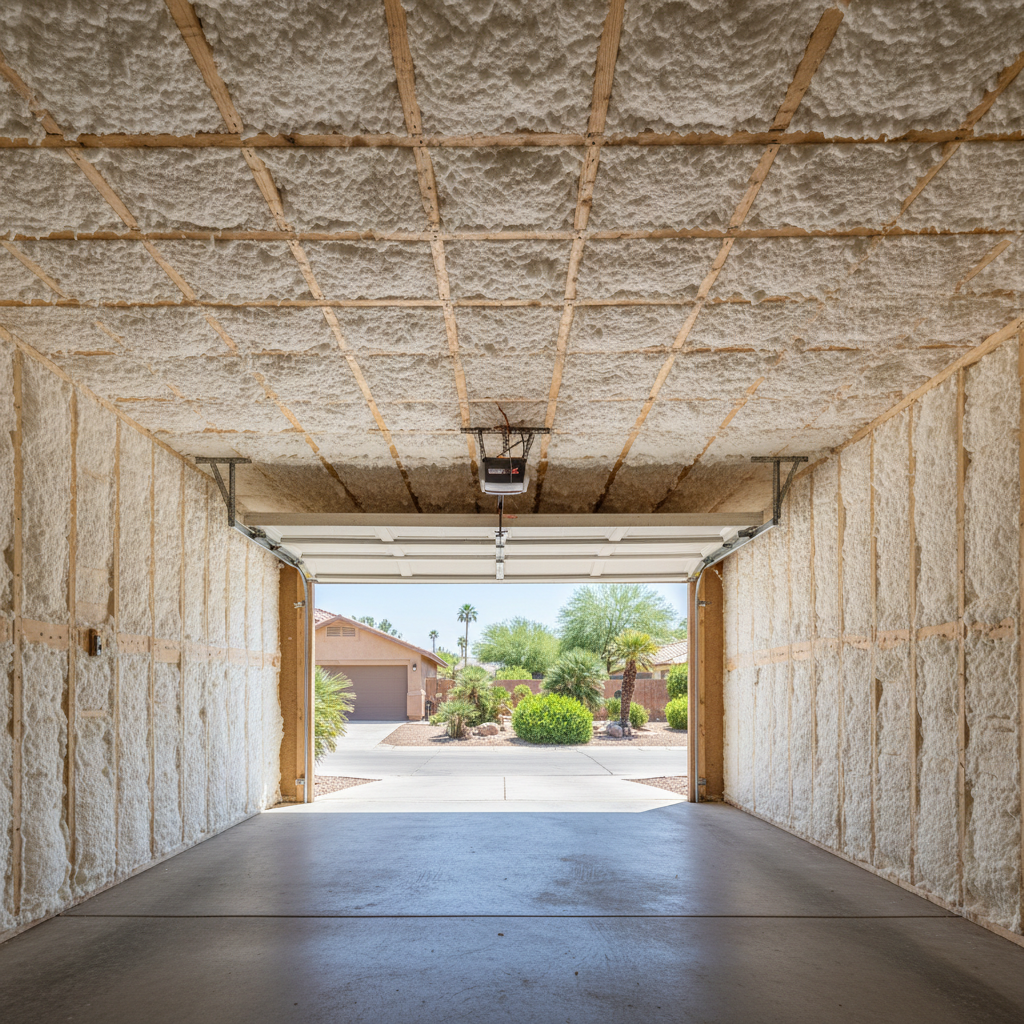
Your garage? Yeah, it's probably the most forgotten spot in your house when it comes to insulation. Most folks just shrug, thinking, "It's just a garage, right?" But here in Chandler, with our brutal summers and even those surprisingly chilly winter mornings, an uninsulated garage is a real headache. It's not just about being uncomfortable; it can send your AC bills through the roof and even mess up whatever you've got stored out there.
Why Your Chandler Garage Really Needs Insulation
Just picture it. That scorching Arizona sun bakes your garage door and walls all day long. Without insulation, all that heat just streams right inside. Your car turns into an oven, your tools get hot enough to burn, and if you've got a workshop or even just a fridge out there, it's working overtime. And that heat doesn't just stay put, either; it radiates into the rest of your house, making your AC unit struggle even more than it already does.
We've done jobs in places like Ocotillo where people have set up home offices or gyms in their garages. Without proper insulation, those spaces are practically useless for half the year. Even if you just use it for storage, those wild temperature swings aren't good for anything from paint cans to electronics to your holiday decorations. Plus, a well-insulated garage can actually help keep pests away because it cuts down on the temperature differences that attract them in the first place.
When's the Best Time to Insulate Your Garage?
Timing is everything, especially with insulation work. You might think summer's the ideal time because that's when you feel the heat most, but honestly, it's not great for the crew or for getting the best results. Here's what I've seen work out best:
- Fall (October-November): This is prime time, truly. The intense summer heat has finally backed off, but it hasn't gotten too cold yet. The materials behave well, and my team isn't battling 110-degree temperatures inside a garage. Scheduling in the fall means you'll be all set for those occasional cold snaps and, even better, you'll be ahead of the game for next summer.
- Early Spring (March-April): Another fantastic window. The weather is usually mild, and you're beating the rush before everyone else realizes their garage is a sauna again.
- Winter (December-February): It's definitely doable, but sometimes the colder temperatures can make some spray foam applications a bit slower to cure, depending on the specific product we're using. We can manage it, sure, but fall or spring are generally smoother sailing.
What you really want to avoid is the peak of summer. It's just too hot for the crew to work efficiently and safely, and that extreme heat can mess with how certain insulation materials perform during installation. We can still do it, but it's tougher on everyone involved.
Weather Conditions That Matter for the Work
When you're dealing with spray foam, which is what I typically suggest for garages because it seals so incredibly well, outside weather conditions definitely play a part. We're talking mainly about temperature and humidity.
- Temperature: For spray foam, there's a sweet spot for application and curing. If it's too cold, the foam might not expand or cure like it should. If it's too hot, it can cure too fast, which isn't ideal either. That's why those shoulder seasons (fall and spring) are just perfect. We're always keeping an eye on the conditions, both inside and outside the garage, to make sure we get the best possible bond and seal.
- Rain: Not a huge deal for an enclosed garage, but if there's any water coming in or leaks, we'd absolutely need to fix that first. You can't insulate over moisture, period.
- Wind: Again, not a major issue inside a garage, but if we're working on exterior sheathing or any open areas, strong winds can affect how the spray goes on.
We'll always chat through any potential weather impacts when we give you a quote and set up the job. Our main goal at Chandler Spray Foam Insulation is to do it right the first time, and that means thinking about all these things.
Protecting Your Investment All Year Long
Once your garage is insulated, you've made a really smart investment. Here's how to keep it paying off:
- Keep the Garage Door Maintained: Your garage door is a huge opening. Make sure the weather stripping around the edges and bottom is in good shape. If it's cracked or missing, you're just letting all that conditioned air escape.
- Seal Up Other Gaps: Check around windows, service doors, and any spots where pipes or wires go through. A little caulk can go a long way in keeping your garage sealed up tight.
- Consider a Garage Door Insulation Kit (if you haven't already): If you didn't get your garage door insulated as part of the main project, it's a massive thermal bridge. There are kits you can add that make a huge difference, trust me.
- Ventilation (if you need it): If you're doing a lot of work in there that creates fumes or a lot of moisture, think about adding a small exhaust fan. Insulation helps regulate temperature, but it doesn't replace proper ventilation for air quality.
Insulating your garage isn't just about comfort; it's about being more efficient, protecting your stuff, and adding value to your home. It’s a project that truly pays for itself, especially here in our Chandler climate. Give us a call if you're ready to make your garage a much more usable space.